
I have been interested in science for as long as I can remember. Even as a boy, I was drawn to questions about how things worked and why the world looked the way it did. In 1968, when I was 17 years old, that curiosity found new direction when my girlfriend (now my wife), Sue, introduced me to astronomy. She taught me the constellations—patterns of stars in the night sky she had learned earlier from her uncle. For the first time, the night sky held my attention. I could make some sense of it. I wanted to understand more.
The following year, we bought a small telescope. On our first night out with it, we stumbled upon Jupiter, with its cloud bands and four Galilean moons. Wow! On our second night, we encountered Saturn with its startling rings. I was hooked. What began as a curiosity quickly blossomed into a passion that has stayed with me for decades. But a far greater revelation awaited me—one that would change how I understood things, and change me.
In 1971, I became a Christian through the testimony of two witnesses from Campus Crusade for Christ. My perspective on everything was shaken to its core. The universe that had once drawn me in through scientific understanding now invited humility, pointing beyond itself as my faith reached toward the God who brought it into being. That awareness is sometimes overwhelming. It is also profoundly comforting for me.
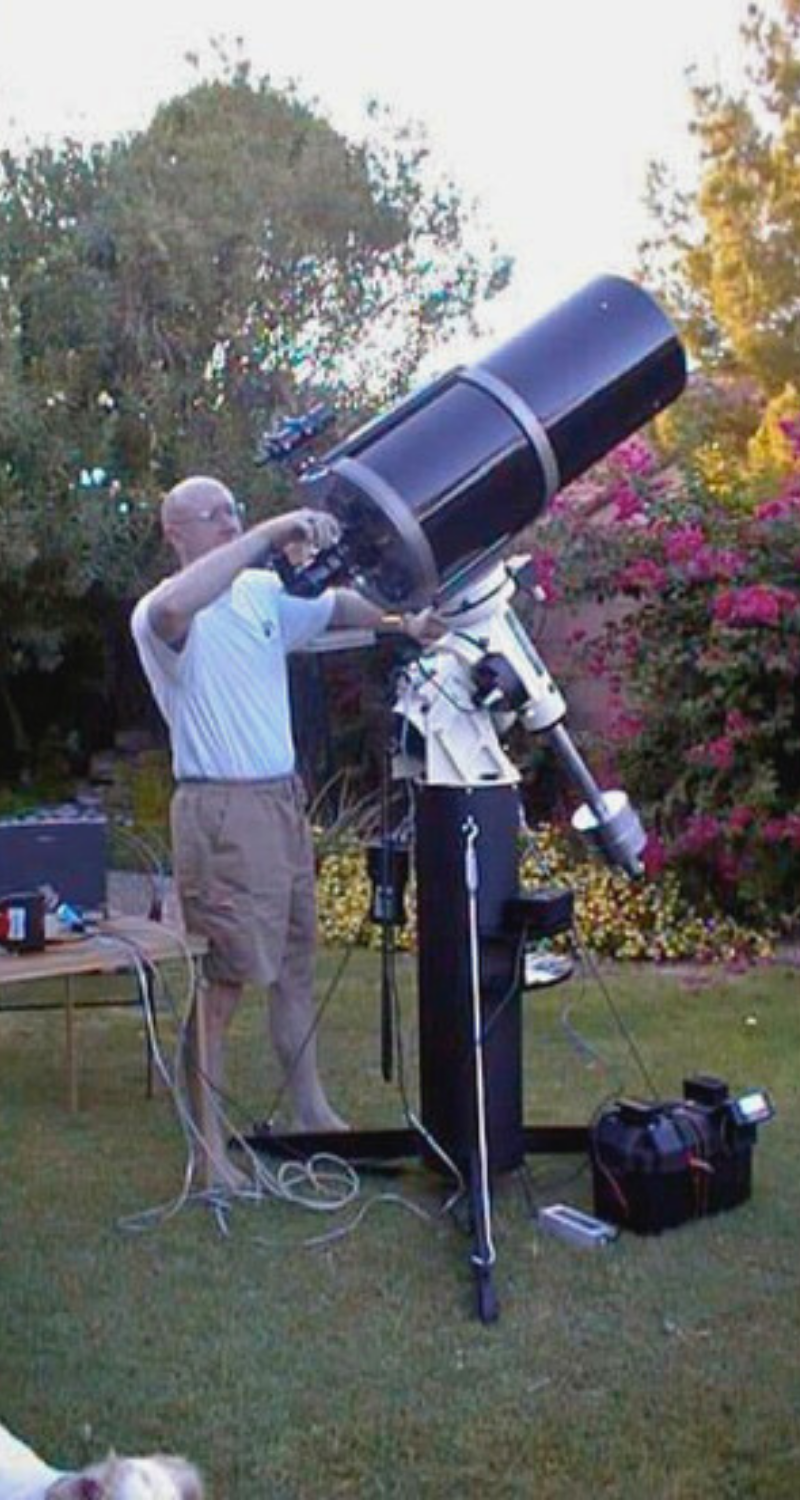
In 1992, I began to dabble in astrophotography. This hobby takes me deeper into the universe. When I contemplate the night sky now, I am struck by awe—and at the same time, by peace. Even from my own backyard, the stars appear endless. Their effervescent twinkling settles me and brings stillness, reminding me that I stand beneath something—and with Someone—far greater than myself. I pause to consider my place in it all, even as my attention is turned outward toward the God whom I believe made me and loves me.
In that puzzling tension, I am reminded that all is well with my soul, even though I am overwhelmed by the vastness and harsh violence my astrophotography reveals in the cosmos. My faith gives me the solid ground upon which to take this in. I know the Maker. He knows me. He is awesome. I am not. And I want to worship. How could stars do this?
I have learned that the answer to that question is found in the Bible, not in astronomy texts—certainly not from most scientists. The Apostle Paul wrote in Romans 1:20 that God’s invisible qualities—His eternal power, His manifold wisdom, and His matchless beauty—are perceived through the things He has made.
The psalmist wrote in Psalm 19:1, “The heavens declare the glory of God; the skies proclaim the work of his hands.”

I hear the stars whisper this to me. They point me beyond themselves, to Him. In dark desert skies, I find myself compelled to worship. The universe confirms to me that He is worthy.
Through astrophotography, I am able to see the beauty of God’s creation more fully. I come to recognize Him as the Great Artist; every other artist merely reflects what He has already made. Like them, I want to share His masterpieces with others.
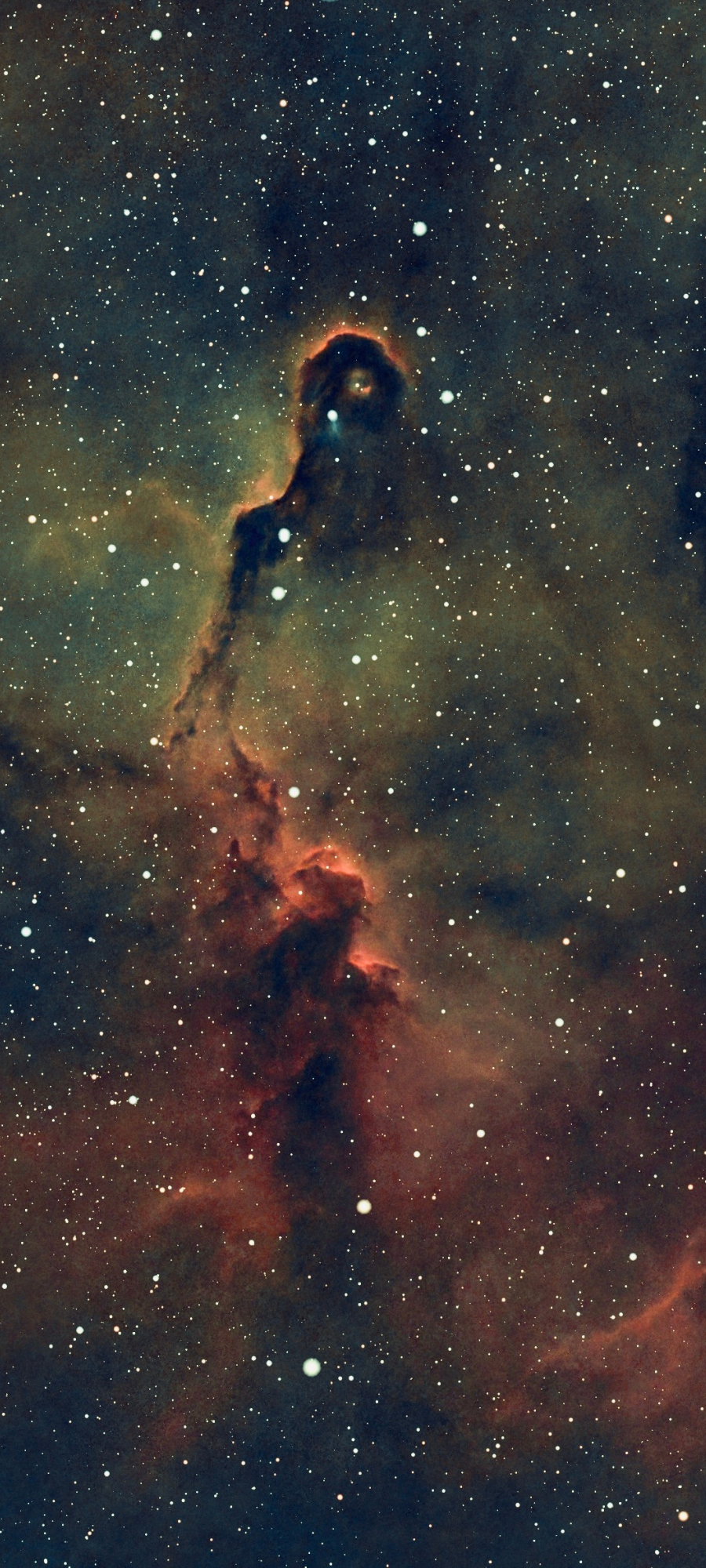
In my images, colors emerge that the unaided human eye cannot see—deep reds from hydrogen, soft blues from oxygen, and warm golds from interstellar dust. Their beauty feels almost extravagant. God did not need to make the cosmos this beautiful for it to function, yet He did. Such beauty seems to me a gift, one that can enrich our lives and bring joy when we are given eyes to see it. I am grateful that astrophotography allows me to do this and to share it.

This is the Rosette Nebula
It is a vast emission nebula located in the constellation Monoceros. It lies about 5,000 light-years from Earth and spans roughly 100 light-years across.
The hollow center has been carved out by intense radiation and stellar winds from a cluster of young, hot stars near its core.
The red glow comes from hydrogen gas while the dark, threadlike filaments are cold dust clouds silhouetted against the bright, glowing gas.
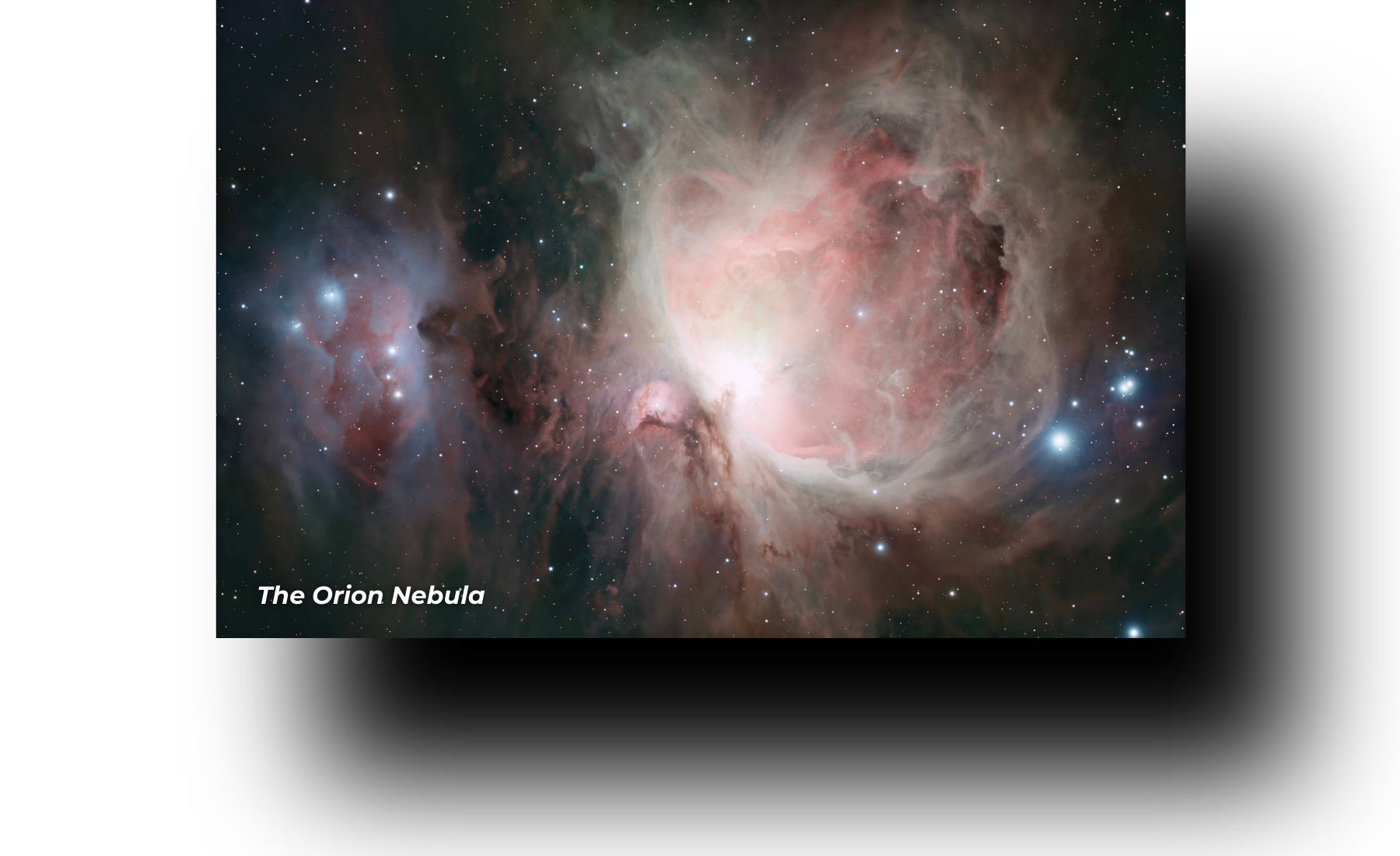
This is the Orion Nebula (M42)
It is a stellar nursery and one of the closest, most active star-forming regions to Earth.
It is in the constellation Orion, about 1,350 light-years away and roughly 24 light-years across. It is visible to the naked eye as the middle star in Orion’s Sword.
Because of its proximity and star formation, the Orion Nebula is one of the best places for astronomers to study how stars and planetary systems form.
It is also one of the most photographed deep-sky objects in the night sky.
That gift motivates me to take these images and offer them to others. Each photograph becomes an opportunity to share a testimony—to bear quiet witness to the One who made it all. My God created this universe. Not everyone accepts that invitation, but I have never encountered hostility when someone is first touched by the grace and beauty revealed in those photographs.
In 1972, I entered medical school at St. Louis University. I had to put astronomy on hold for a while. Even then, I could not escape the wonders the stars teach us. The stars themselves tell a story of both power and humility. Many are vastly larger and brighter than our sun. Some end their lives in massive explosions that scatter the heavy elements they made into space—elements that later become part of new stars, planets, and even living beings.
In medical school, they taught me the iron in my blood and the calcium in my bones were formed in ancient stars long before Earth existed. Unknowingly, my teachers were declaring the glory of God.
Scripture tells us that God formed humanity from the dust, and astronomy reveals just how He chose to make it. We were made from star stuff.
We are fearfully and wonderfully made!
Fast forward to 1988, when Sue and I moved to Phoenix from St. Louis. Clear skies invited me back to astronomy and astrophotography. More than half a century after I first began exploring them with Sue, the message of the stars to me is the same. His Word and His works speak together, declaring the same truth: He is eternal, wise, and worthy of trust.
I am invited—again and again to wonder, and to share His wonders with others.

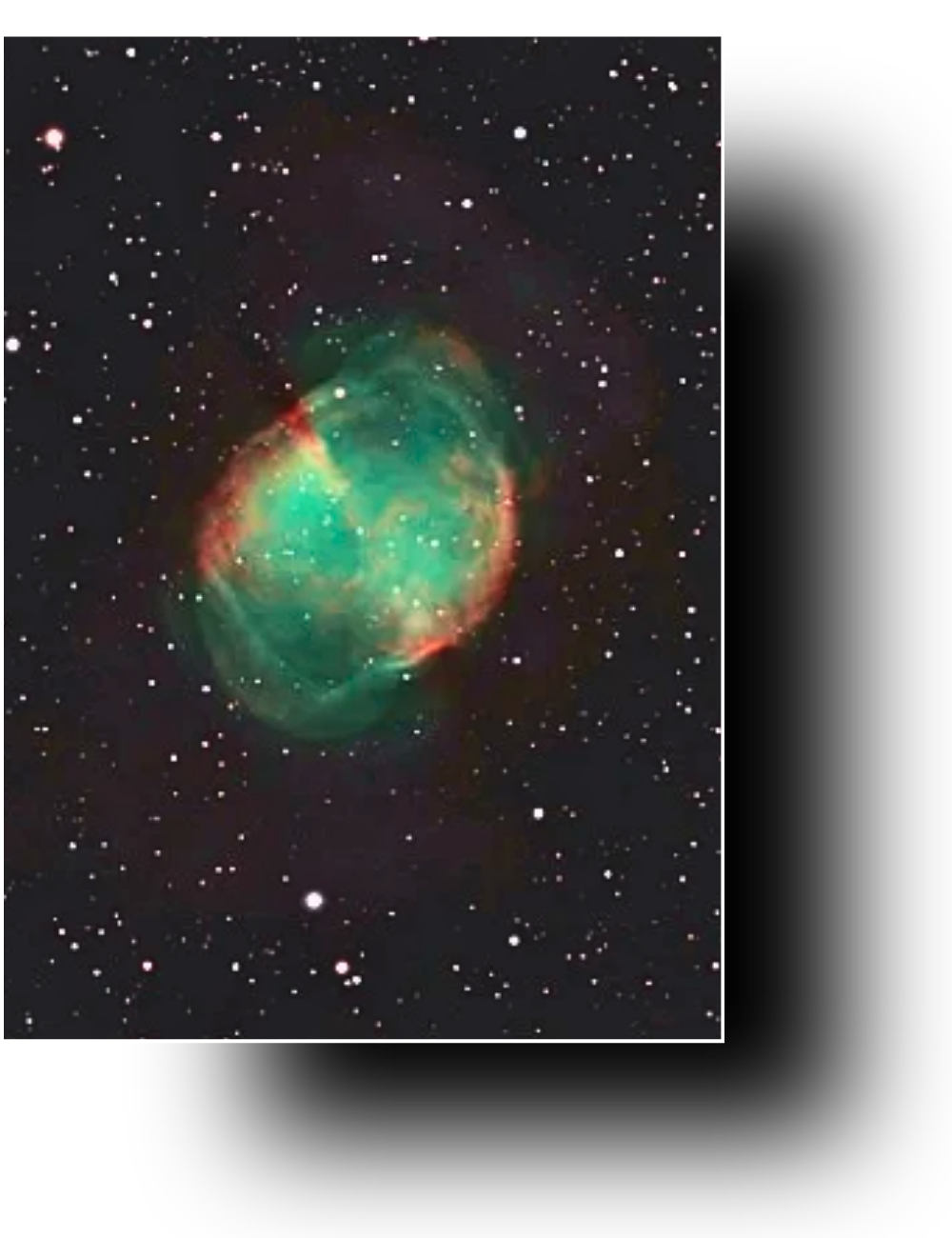
This is the Dumbbell Nebula (M27)
Also called the Apple Core Nebula.
The “dumbbell” shape comes from gas being blown off in two main lobes rather than evenly in all directions.
The original star ran out of nuclear fuel, swelled into a red giant, then shed its outer layers. The hot core left behind now lights up the expanding gas cloud.
In a few tens of thousands of years, the nebula will disperse — leaving only the cooling white dwarf behind.