




Tyler Staton is the pastor of Bridgetown Church in Portland, OR. He’s a gifted preacher and theologian, and his book The Familiar Stranger is a worthwhile read for new believers and seasoned Christians, alike. In the Familiar Stranger, Staton addresses a cultural problem in the church at large: we don’t know what to make of the third person of the Trinity - the Holy Spirit. In a Christian world that often misunderstands the Holy Spirit as an abstract, ethereal concept, Staton’s book helps believers recover a personal and living relationship with the extraordinary equipping of the Holy Spirit. Staton writes: “The scandal of the Holy Spirit isn't power. If there's a Creator to be known, power has to be part of the equation. The scandal is the power of God dwelling in and operating through wounded, ordinary people. It's not your gifting that makes you an excellent candidate to be a river of life flowing into the dead places; it's your wounds. It's not the gifting or qualifications of today's church that makes us excellent candidates to reshape history and rewrite the stories of our cities through love; it's our wounds and our ordinariness.” The Familiar Stranger is an excellent book for believers, I hope you read it!


This book transformed how I saw people. I was working full-time as a 911 dispatcher while leading our house church. My heart had become hardened over the past few years as I witnessed firsthand the worst of humanity. I remember walking through the grocery store listening to the audiobook, which Father Greg narrates, as the convicting message in the third chapter hit me. I began to see those I was passing in the aisles differently through God’s radical boundary-erasing love.
Father Greg Boyle, founder of Homeboy Industries, takes you on an intimate journey through his life shared with the hommies of Los Angeles. It is a collection of inspiring, faith-based stories that highlight the humanity of those involved in gang life, emphasizing the importance of seeing beyond limitations and finding worthiness and connection through love and service. You won't regret picking this one up; the audiobook is also a lot of fun!
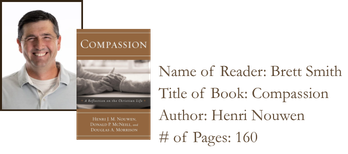
I don’t recall who first introduced me to Compassion by Henri Nouwen, but I’m forever grateful to them.
In my early twenties, my spiritual life was expanding beyond personal piety into God’s call to love and serve my neighbors. I knew my faith was meant to be more than something I believed—I needed to live it. Nouwen’s insights became an essential guide, shaping both my adult life and my ministry.
Compassion is a deeply rich theological work that, while challenging, is written with remarkable clarity and accessibility. Nouwen invites every Christian to become more like Jesus. He begins by exploring what it means that the God of compassion reveals himself in Christ—the God who enters into our human suffering as our Lord of grace and mercy. He then challenges readers to choose compassion over competition and grace over superiority in their relationships with others. Finally, he points us toward timeless spiritual practices that form followers of Jesus in the spirit of Christ.
The book becomes even more profound when understood in light of Nouwen’s own life and calling. A respected Harvard scholar, he left the prestige of academia to answer God’s call to serve in the L’Arche communities in Ontario, living alongside adults with severe intellectual disabilities. His life gave credibility to the message he proclaimed.
One insight from this book has stayed with me for decades: the word compassion literally means “to suffer with.” When I first discovered that, something unlocked in my relationship with God. I began to understand that God’s primary desire was not simply to straighten me out or fix my failures. Instead, he entered into my life, my pain, and my brokenness to heal my wounds. That realization transformed the way I understood God’s love for me and his call to love others.
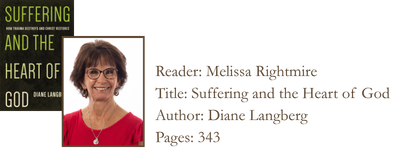
Dr. Diane Langberg has counseled trauma survivors for over 50 years. I picked up this book after hearing her speak at a conference. In this book she clearly articulates the saving grace of God for not only those who have been on the wrong side of all sorts of abuse, but she also challenges the reader to see the abuser through the compassionate eyes of Jesus while boldly revealing our own biases. Diane has been all over the world and seen first hand incredibly extreme abuses we are not familiar with here in the US. Yet, with every instance of abuse she re-tells, she talks about the Savior and the possibilities of healing and what that can look like. This book does not sugar coat anything! Nor does it employ meaningless platitudes or take for granted any amount of suffering and trauma a person may go through. Instead, with great craft and experience, Dr. Langberg opens the eyes of the reader to the suffering of humanity while putting on full display the power of the resurrected Christ.
This book has helped me have a much deeper level of compassion and hope for the hurting. It is for anyone who wants to be a beacon of Jesus’ light and hope in this dark world. We are all living next to people who have been hurt. Sometimes we find they are in our own homes. Sometimes we find they are us. This book challenges the reader to see the truth of the hurt and the fullness of life Jesus offers.
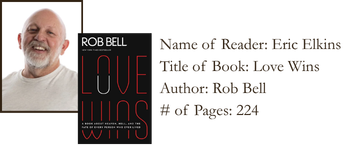
A book that made a tremendous impression on my spiritual life was Rob Bell's Love wins. We read it as a staff here at Crossroads shortly after it came out and would have really interesting theological conversations as a result. It caused a lot of consternation in the church because it asks the kinds of questions some people have but those looking for
certainty are uncomfortable discussing. The questions for me weren't so much the point, but the fact that you could ask questions. I grew up in a high control fear based church. I can assure you questions and discussions were not part of the program for youth or young adults.
For me I always felt the questions meant I didn’t have enough faith or worse... I wasn’t chosen! I didn’t realize that many of these questions or ones similar had been a topic of debate/discussions for theologians for centuries. Through the conversations this book inspired, I also began to learn and understand the difference between Irresistible grace and Preventative grace... Limited atonement vs Unlimited atonement and other doctrinal beliefs.
As I became more comfortable with “questions,” I was introduced to another book, " Sinners in the Hands of a Loving God," which reveals more of the origins of the theological differences that are predominant in Christianity today. In my years at Crossroads, I am grateful it has always been a church where you could ask the tough questions and not be shamed for asking.
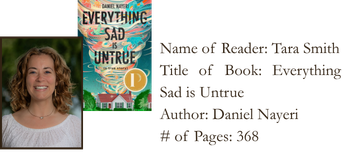
For all that it’s my favorite book, Everything Sad is Untrue is difficult for me to find the words to describe. I could tell you that it’s a memoir written by an Iranian immigrant to Oklahoma, fleeing the persecution of his government after his mother’s conversion to Christianity. But it’s not an autobiography.
I could tell you that it’s filled with poems and prose so heartachingly alive that your soul will weep. But it’s not a book of poetry.
I could tell you that it’s a roadmap for a life well lived, that it will teach you compassion and empathy and how to see God’s glory in absolutely everyone. But it’s not a devotional book.
“Every story is the sound of a storyteller begging to stay alive,” says the author. And Daniel Nayeri is alive with the audacity to trust in a God who not only loves us, but sees and hears us; a God who does not abandon his children but is working under the surface of absolutely everything to reconcile all lost things.
The author is a gracious host. As you read, you get the sense that he’s invited you into a well-prepared kitchen with much room and warmth, cleared his throat, and said, “Let me tell you a story.” The story itself is a gift, in that Nayeri somehow reaches across the distance of space and time to let us into his heart. The entire book soars with unembarrassed hopefulness in an ancient tale of redemption, unafraid to believe in a God so good that in the final days, everything sad will come untrue.